REVIEW · CANNES
Fascinating Cannes – Private Walking Tour
Book on Viator →Operated by US LLC – Local Tours in Lithuania · Bookable on Viator
A short walk, big Cannes flavor. This private stroll is interesting because it links Le Suquet’s old-town streets to the city’s most famous waterfront, with a guide to connect the dots. I like the history stories that turn ordinary corners into something you actually remember. The main drawback is the price: at $388.18 per person, it’s expensive for a walking tour unless your group size makes it feel worth it.
You’ll spend about 2 hours 30 minutes moving at a comfortable pace, with a mobile ticket and an English-speaking guide. It’s designed for a small group (only your party joins), and the route runs from Quai Laubeuf near public transport to the Croisette Beach area.
In This Review
- Key highlights worth your attention
- The route that turns Cannes into a real walkable story
- Quai Saint-Pierre: Italian-style facades and the old-port rhythm
- Rue du Suquet: the Le Suquet lanes where the town identity shows
- Marche Forville: a covered market that smells like real Cannes
- Rue Meynadier: from horses and carriages to a lively pedestrian lane
- Rue Félix Faure and the Allées de la Liberté center-city reset
- Palais des Festivals and Congresses: the Cannes events landmark stop
- Boulevard de la Croisette: finishing on the iconic beach line
- Price and value: what $388.18 per person buys you
- How to make the walk comfortable (and actually fun)
- Who this Cannes private walking tour suits best
- Should you book Fascinating Cannes – Private Walking Tour?
- FAQ
- Is this tour private?
- How long is the Fascinating Cannes Private Walking Tour?
- What language is the tour offered in?
- Where does the tour start and end?
- Are there admission fees at the stops?
- What if the weather is bad?
Key highlights worth your attention
- Le Suquet street vibe, from Rue du Suquet to the charming lanes that lead you through the old town feel
- Marche Forville market stop, including a dedicated flower area you can smell and look at
- Rue Meynadier’s long pedestrian identity, rooted in centuries of street use
- Palais des Festivals and Congresses photos stop, tied to major Cannes events
- Croisette payoff at the end, with the long public beach along the iconic boulevard
The route that turns Cannes into a real walkable story
Cannes can feel like two different cities at once: the postcard waterfront and the older hill neighborhoods behind it. This tour smartly moves you through both, so you don’t just see the famous views—you understand how the town grew and where people lived. The route also keeps practical sense: it focuses on streets, viewpoints, and a major market, rather than “sit-and-listen” moments that can drag.
Because it’s private, I like that you’re not stuck timing your curiosity to match a larger group. You can ask small questions as you walk—things like why certain streets feel older, or how the waterfront identity ties back to the hill. And since the stops are free to access (no paid admissions listed for each stop), you’re not burning your time hunting ticket machines.
The one thing to plan around is weather. The tour runs outside, and it’s explicitly designed for good conditions, so if it’s rainy, expect the provider to switch dates or refund—rather than forcing you through a miserable walk.
You can also read our reviews of more walking tours in Cannes

Quai Saint-Pierre: Italian-style facades and the old-port rhythm
You start at Quai Laubeuf, and the first stop at Quai Saint-Pierre sets the tone fast. You’re looking at buildings in that Italian-style look—three or four stories—leaning against the backdrop of the Suquet hill, which makes the whole scene feel layered, not flat.
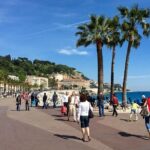
This quay side also shows Cannes as a working waterfront. Along the Old Port side, there’s a two-lane road paired with a wide walkway, and restaurants stretch their terraces onto the promenade-like sidewalk. You get palm trees at the base of the buildings, which gives you that classic Riviera look without needing to chase it later.
What I find useful here is the orientation. Standing in this area early makes it easier to understand what you’re walking toward as the tour climbs toward the old-town streets. If you arrive early or are jet-lagged, this first segment is a smart way to get your bearings quickly.
Rue du Suquet: the Le Suquet lanes where the town identity shows
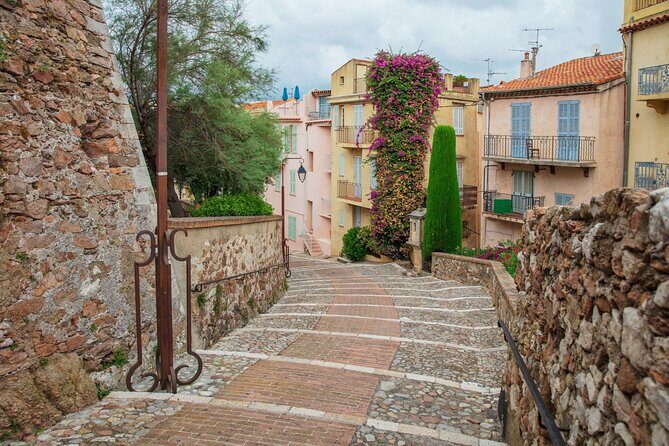
From the quay, the tour transitions into Rue du Suquet, where the mood starts to shift from open promenade to small streets and old-town textures. The description points to the kind of hilly, meandering cobblestone street Cannes is known for—especially the feeling you associate with areas like Rue St. Antoine inside Le Suquet.
This stop matters because it’s where Cannes stops being a single “tourist strip” and becomes a neighborhood story. You can see how narrow lanes and elevation create a different rhythm than the beachfront: slower, more intimate, and more connected to local eating and day-to-day life.
One practical note: cobblestones and slopes can be rough on shoes. Even if your feet are fine normally, I’d still plan for a walking-friendly pair of sneakers. This tour isn’t about museum floors; it’s about street surfaces and changing gradients.
Marche Forville: a covered market that smells like real Cannes
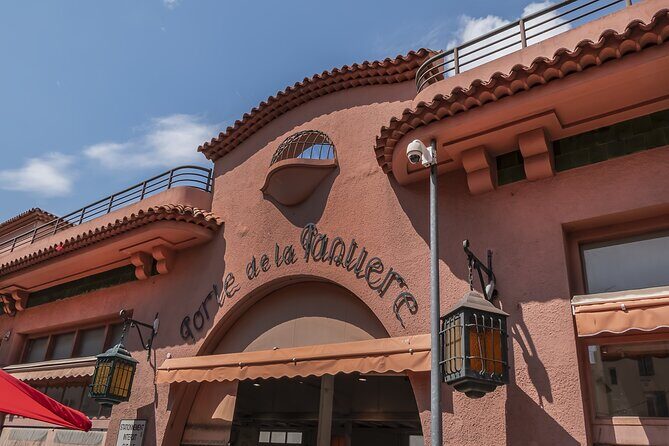
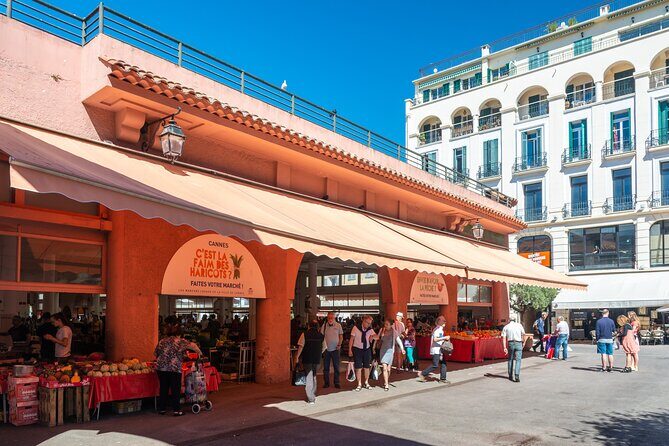
Next comes Marche Forville, located at the district’s lowest point. It’s described as a top-notch covered market on the Riviera, which is exactly why I like it on a walking tour. A covered market gives you a sensory break while still keeping you moving through an authentic spot.
Inside, there’s a section devoted to fragrant flowers, which is more than a pretty detail. This is the kind of place where your brain goes from sightseeing mode to “this is lived-in” mode. You’re not just looking at architecture; you’re seeing what people buy, what people notice, and what gives the market its character.
The best value here is simple: it’s a market stop without the stress of formal admissions. You can take your time looking around, and you can decide how much you want to linger versus keep the walking pace. If you like food culture but don’t want a full meal tour, this is a strong compromise.
Rue Meynadier: from horses and carriages to a lively pedestrian lane
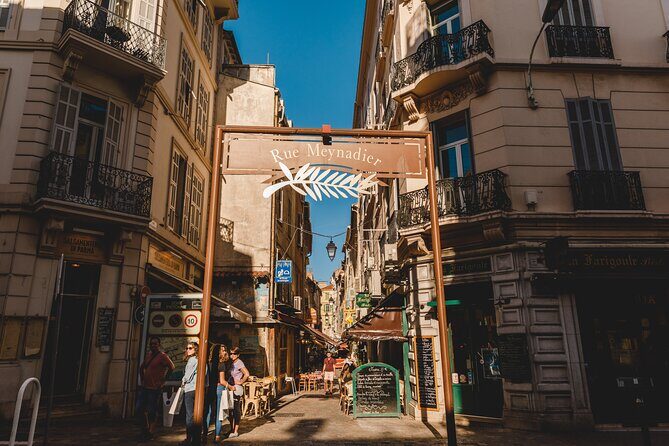
Rue Meynadier is one of those streets where the past shows through the present. The key detail is the timeline: horses and carriages used this route since the 16th century, and today it’s a pedestrian lane. That transformation alone tells you a lot about how traffic needs and city priorities changed over time.
The walk itself is described as a lively retail street where trades sit close together—like a butcher near a cheesemaker—while fashion boutiques weave around the local product shops. That “neighboring trades” feel is one reason I think this stop works well on a guided walk: the guide helps you notice patterns you’d otherwise speed past.
This segment also functions like a connector. The route is set up so Rue Meynadier leads you toward the Suquet area. In other words, you’re not just strolling randomly—you’re moving through the town’s actual logic, from market-level streets to the hill-adjacent atmosphere.
You can also read our reviews of more private tours in Cannes


Rue Félix Faure and the Allées de la Liberté center-city reset
After the older lanes, you hit Rue Félix Faure and the Allées de la Liberté area. This part gives you a reset: you’re in the center of the city at the foot of the historic area, between the refurbished Cours Félix Faure and the Pantiero promenade.
I like that the description frames these walkways as a “marriage” between local origins and openness to the world. That may sound poetic, but on the ground you feel it as a shift in space: less tight, more open, and more suited to strolling as an everyday activity.
If you’ve been concentrating on the old-town feel, this is where you’ll start to notice how Cannes balances its traditions with a global reputation. It’s also a good mental break before the tour moves into one of the most famous zones in town: the film-festival address and the waterfront boulevard.
Palais des Festivals and Congresses: the Cannes events landmark stop
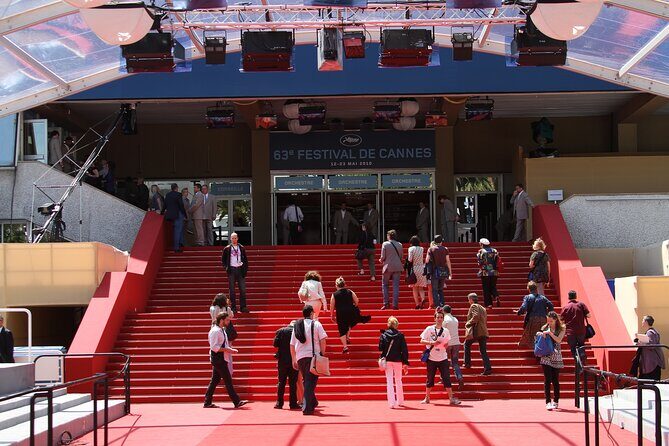
The tour then brings you to the Palais des Festivals et des Congrès, Cannes’ convention center. It’s not just a building you pass—it’s the address tied to major events, including the Cannes Film Festival, the Cannes Lions International Festival of Creativity, and the NRJ Music Award.
Even if you’re not traveling during any of those festivals, this stop is still valuable because it explains why Cannes feels like a stage. The building is part of the city’s identity, and once you know what it hosts, you’ll see references everywhere—signage, conversations, and the overall “event city” vibe.
You should also think practically here. This is a photo-and-orientation stop, and the tour data doesn’t list any paid admission requirement. So treat it like a landmarks moment: look at the scale, appreciate the event gravity, and then keep walking. It’s efficient sightseeing.
Boulevard de la Croisette: finishing on the iconic beach line
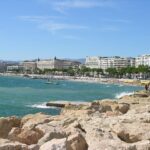
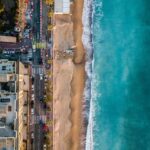
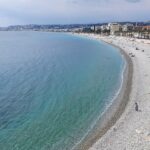
No Cannes walk feels complete without Boulevard De La Croisette, and this tour ends with the waterfront payoff. La Croisette is described as the iconic beachfront boardwalk, and the beach along it is a long, public stretch of sand.
Ending here is smart for two reasons. First, it matches the way most people picture Cannes, so you end on a “wow, I get it” note. Second, it’s practical: Croisette Beach is easy to continue your day from—whether you’re grabbing a drink, watching the waterfront scene, or taking transport onward.
If you’re sensitive to sun and wind off the water, plan for it here. Even in comfortable temperatures, the beachfront can feel cooler or breezier than the inland streets. Bring sunglasses, and if you’re the type who likes to linger, wear shoes you can handle on sand edges and boardwalk areas.
Price and value: what $388.18 per person buys you
Let’s talk money honestly. $388.18 per person is not “cheap walking tour” pricing. You’re paying for private guide time, route planning, and the convenience of a guided connection between neighborhood zones.
What makes the price more defensible is how the tour is structured:
- You get multiple distinct neighborhoods in one outing (quay, old-town streets, market, central boulevards, and Croisette).
- The stops focus on places that are free to access, so your money goes mostly to the guide and interpretation, not ticket fees.
- It’s in English and private, which matters if you want a calmer pace and a guide who can respond to your questions.
Here’s the balancing question I’d ask you: are you going solo or as part of a duo/family? The tour offers group discounts, which can help, and private tours tend to scale better when more people share the fixed cost of the guide.
Also, one review comment—without getting stuck on negativity—makes the point that this can feel pricey if you compare it to a generic self-guided walk. My take: if you’re the kind of person who loves stories attached to street corners, you’ll likely feel the guide value. If you only want views and don’t care about context, you may find it easier to DIY.
How to make the walk comfortable (and actually fun)
This is a street-walk experience, so comfort affects how much you enjoy it. Since the route covers cobblestone streets and includes market and promenade areas, I’d pack for movement rather than “museum posture.” Wear shoes that can handle uneven ground and that won’t punish you after 2–3 hours.
Timing matters too. You’ll likely cover each stop in roughly 18–19 minutes, which is long enough to absorb the vibe but short enough that you don’t lose the thread. If you tend to wander and then regroup late, try to keep an eye on the group so you don’t accidentally cut into your own tour time.
Finally, lean into the market moment. Walking tours are often picture-first. Here, Marche Forville gives you a chance to slow down slightly for senses: smell the flowers, look at stalls, and take the scene in without turning it into a shopping obligation. It’s a good “real life” anchor in the middle of the city highlights.
Who this Cannes private walking tour suits best
This tour fits best if you want a guided “Cannes story” rather than a checklist. I’d especially recommend it if you:
- enjoy history context tied to real streets and not just plaques
- like markets as sightseeing, even if you don’t plan to buy much
- want the big Cannes icons (Palais des Festivals, Croisette) but also want what’s behind them in the city layout
It’s also a strong choice if you’re visiting with a small group and want privacy. With only your group participating, you can move at a pace that matches your comfort level.
If you’re traveling with limited interest in street narratives, or you’re trying to keep costs ultra-low, you might question whether a private guide is necessary. In that case, self-guided walking might get you the views. But if you want the “why this street, why this placement” answers, you’re paying for that.
Should you book Fascinating Cannes – Private Walking Tour?
If you can afford it and you enjoy guided interpretation, I think this is an easy yes. The route is built for variety—coastline, hill-adjacent old town, a major covered market, and the event-and-beach Cannes people talk about. The informative, history-forward approach is the main reason this feels more than just a walk.
I’d only hesitate if the price feels out of reach for you, or if you’d rather spend your money on meals and a longer day. In that case, you might get similar sightseeing vibes on your own—especially since each stop is listed as admission free. But for many visitors, paying for a private guide is what turns “nice streets” into a clearer, more memorable Cannes.
FAQ
Is this tour private?
Yes. It’s listed as a private tour/activity, so only your group participates.
How long is the Fascinating Cannes Private Walking Tour?
The duration is approximately 2 hours 30 minutes.
What language is the tour offered in?
It’s offered in English.
Where does the tour start and end?
It starts at Quai Laubeuf 06400 Cannes, France, and ends at Croisette Beach in Cannes.
Are there admission fees at the stops?
The stops are listed with admission ticket free, meaning you’re not paying entry fees for these parts of the route.
What if the weather is bad?
The experience requires good weather. If it’s canceled due to poor weather, you’ll be offered a different date or a full refund.