REVIEW · CANNES
Astronomy Evening “Rando Astro Fréjus”
Book on GetYourGuide →Operated by Sport'Habitude · Bookable on GetYourGuide
Saturn’s rings look different live. Rando Astro Fréjus is a 1h30 astronomy evening in Provence where you use quality telescopes and get simple explanations of what’s up in the night sky. I like the way the guide connects big ideas to what you’re actually seeing, from constellations to the solar system and zodiac signs. The one real catch: nights can feel cool, so you’ll want to follow the advice to bring hot clothes.
What makes it especially fun is the pacing. You’re not sitting in a classroom for an hour. You’re outside, stopping to look, then getting guided commentary between views. And with a small group capped at 10, the vibe stays friendly instead of rushed.
One more thing to consider: you don’t start at a shop. You meet at a specific spot, then walk about 5 minutes. That’s easy, but arrive a bit early so you don’t feel frantic when it’s time to start observing.
In This Review
- Key things I’d book for
- A practical astronomy evening in Provence, not a lecture
- What you’ll actually see: Saturn, Jupiter, the Moon, and starlight
- Learning constellations and zodiac signs without feeling tested
- Telescope time: why “quality equipment” changes everything
- Your 1.5-hour flow between Cannes and St Tropez
- The guide experience: friendly, multilingual, and built for questions
- Small group size helps you actually enjoy the night
- Price and value: $33 for telescope access and a real guide
- What to bring for comfort and clear viewing
- Who this astronomy evening is best for
- Should you book Astronomy Evening Rando Astro Fréjus?
- FAQ
- How long is the Astronomy Evening Rando Astro Fréjus?
- Where do I meet for the activity?
- What will I be able to see during the evening?
- What languages are the explanations available in?
- Is this suitable for children?
- Is equipment included?
- What should I bring?
- Is it wheelchair accessible, and can I cancel?
Key things I’d book for
- Saturn’s rings and Jupiter with moons through a telescope setup that’s built for real viewing
- Craters of our Moon, so you’re looking at something close enough to feel personal
- A friendly astronomer’s explanations that suit adults and kids
- Starlight and zodiac + constellation basics, taught in plain language
- A small group (10 max) so questions are actually possible
A practical astronomy evening in Provence, not a lecture
If you’ve ever tried stargazing on your own, you know the problem. You look up, you see stars, and then you’re stuck guessing. This experience fixes that fast by giving you an on-the-spot guide to what you’re seeing and what it means.
The teaching style matters. You’re with a friendly astronomer who explains what’s going on as you look through the telescope. That’s why people who come with kids end up staying engaged instead of drifting off. It’s also why adults like it even if they’re not science geeks.
You’ll also get a full “sky picture,” not just one object. The evening covers the solar system, constellations, and zodiac signs. That mix helps you go home with more than a few photos. You get a mental map for your next clear night.
You can also read our reviews of more tours and experiences in Cannes.


What you’ll actually see: Saturn, Jupiter, the Moon, and starlight
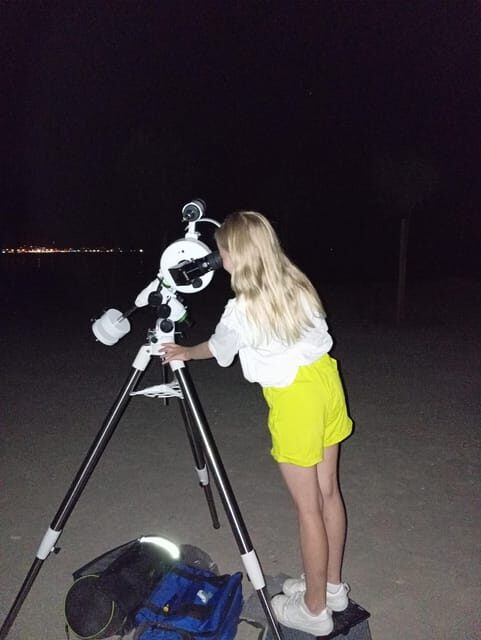
The headline objects are the ones most people dream about: Saturn’s rings, Jupiter with its moons, and the Moon’s craters. Those are big visual targets. And in a telescope, they feel oddly close—less like distant homework and more like a real view.
Saturn’s rings are usually the moment that changes the whole mood. It’s one thing to read about rings. It’s another to see the shape and understand why astronomers get excited about it.
Jupiter is the second wow factor. You’re not just looking at a bright planet; you’re looking at Jupiter and its moons. That’s a great way to make the solar system feel three-dimensional, even when you’re standing still.
Then comes the Moon. Seeing craters is a classic stargazing win because it’s readable through a telescope. It also gives you something steady to focus on, which helps everyone—especially children—stay interested while the guide explains what to look for next.
Between those main stops, you’ll also check out many other targets. The exact list isn’t the point. The real benefit is that the evening keeps moving through highlights, so it never feels like you’re stuck waiting for one moment to happen.
Learning constellations and zodiac signs without feeling tested
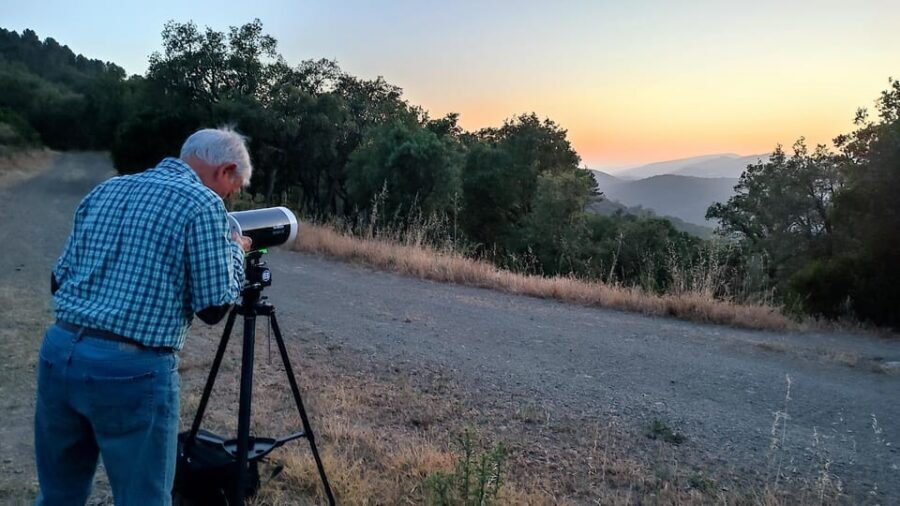
One of the most praised parts is how the explanations stay simple. That matters more than people think. Astronomy can sound complicated fast. Here, the approach is built to match what you can see during the session.
You start with the basics—constellations and how to orient yourself in the sky. Then you connect that to the solar system and the zodiac signs. The zodiac part is a smart choice for families because it’s a familiar concept. Even if you don’t know the details, you’ll understand why it shows up in stargazing.
I like this structure because it gives you context right away. You’re not just collecting objects. You’re learning how astronomers and skywatchers think: finding patterns, using what’s visible, and turning a night sky into something you can recognize.
And if you’re traveling with kids, that’s the secret sauce. The evening doesn’t just hand over gadgets. It gives them something to look for. That turns waiting for a clear view into a game.
Telescope time: why “quality equipment” changes everything
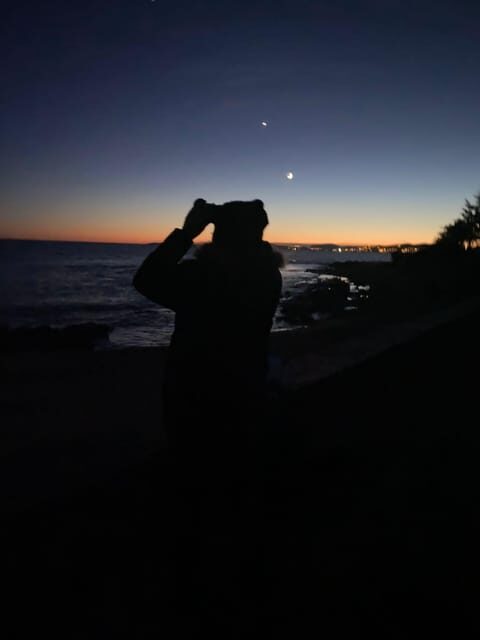
You’ll be using the necessary astronomy equipment for the activity, and that’s not a small detail. Telescope nights live or die on the setup. If the telescope isn’t handled well or the view isn’t sharp, it becomes frustrating instead of magical.
Here, the promise is clear: quality telescope viewing is part of the plan. You’re not told to bring your own gear. You’re provided the equipment, which lowers the stress if you’re traveling light.
The telescope experience also affects your patience. When the views are good, you want to look longer. When they’re unclear, you rush to the next thing. Based on the strong ratings, the focus stays on the good viewing moments—Saturn, Jupiter, and the Moon—so you leave feeling like you saw the real deal.
Your 1.5-hour flow between Cannes and St Tropez
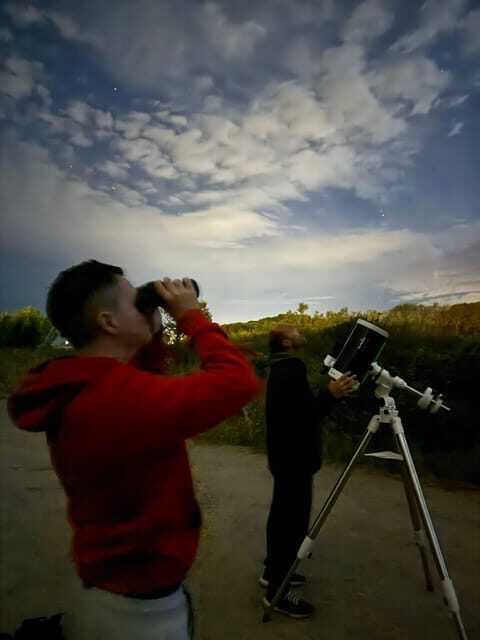
The evening runs about 1.5 hours. Starting times vary, so check availability when you book.
The format is straightforward. You meet at the designated point, then you walk about 5 minutes. From there, the group moves and pauses to observe different targets. You’ll stop to look at Saturn, Jupiter, the Moon, and other objects along the way.
This “stop-and-look” style makes a difference. You don’t spend the whole time at one location pretending the sky will be perfect from one spot. Instead, you get multiple observing moments. That keeps the evening fresh and also gives the guide flexibility to show what’s visible.
It also fits the real-world vibe of nighttime travel in Provence. You’re outdoors, you’re seeing the coast region in the dark, and you’re switching between explanation and observation. The whole rhythm is built to hold attention for both adults and kids.


The guide experience: friendly, multilingual, and built for questions
The instructor is French, Italian, and English. That matters if you’re visiting from abroad or if your group includes mixed language comfort. You should be able to follow the explanations without struggling.
The reviews also point to a standout astronomer named Edmond. People describe him as great and show-focused. That tells me the guide role here is active, not passive. You’re not just handed a telescope and left to figure it out.
For me, the best sign of a good guide is this: you don’t have to work to understand what’s happening. You can ask questions, and the answers land in a way you can use immediately while you’re still looking up.
If you’re the type who enjoys learning, you’ll like that the evening covers multiple topics—constellations, zodiac, the solar system—without turning into a textbook.
Small group size helps you actually enjoy the night
This is limited to 10 participants. That’s a sweet spot for an outdoor activity. Big groups can turn telescope viewing into a line. Small groups keep it human.
With 10 max, you’re more likely to get your turn without chaos. You’re also more likely to feel comfortable asking questions. And for families, that means fewer distractions and less time waiting while kids lose interest.
The small-group format also helps the guide manage the pace. In 1.5 hours, the evening needs good timing: short explanations, quick telescope viewing, then the next target. Smaller groups usually make that kind of flow easier.
Price and value: $33 for telescope access and a real guide
At $33 per person, you’re paying for two things that are hard to replicate on your own: telescope access and a guided explanation.
If you travel with kids, the value gets even clearer. You’re not just buying a fun evening. You’re buying equipment plus someone who can translate the sky into simple terms. That kind of guided learning tends to be the difference between kids enjoying astronomy and kids counting minutes until it ends.
You also get a full experience package: the necessary astronomy equipment is included. That helps you avoid extra spending on rentals or gear while traveling.
Could it cost more elsewhere? Maybe. But based on the structure here—quality telescopes, a focused 1.5 hours, and a multilingual astronomer for a small group—this looks like a straightforward, fair deal for what you’re getting in Provence.
What to bring for comfort and clear viewing
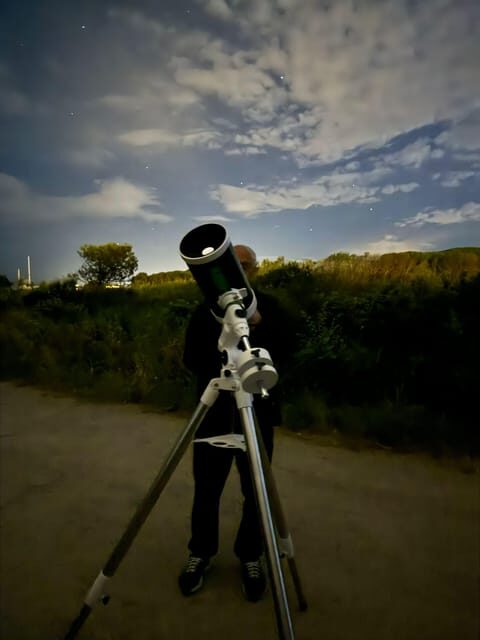
The organizers specifically tell you to bring hot clothes and drink water. Take that seriously.
Even if Provence feels mild during the day, nighttime can change fast when you’re standing still for telescope viewing. Warm layers help you stay comfortable so you can actually enjoy the full 1.5 hours.
Bring water because it isn’t included. It’s a small thing, but nothing kills attention like realizing you’re thirsty halfway through.
You’ll also be outside as you look through equipment and listen to explanations. So wear something you can move in, not just something fashionable.
Who this astronomy evening is best for
This activity is suitable for everybody, and it’s wheelchair accessible. It’s also designed to work for different group types: kids, parents, solo travelers, or friends.
I’d point it toward you if:
- you want a guided way to learn constellations and zodiac basics
- your group includes kids who need a clear reason to pay attention
- you want the main “big three” views: Saturn rings, Jupiter with moons, and the Moon’s craters
- you’d rather spend $33 on a guided night than fuss with equipment on your own
It may be less ideal if you’re chasing a deep technical astronomy session with long theory. This is about practical viewing and understandable explanations tied to what you see in the telescope.
Should you book Astronomy Evening Rando Astro Fréjus?
Yes, if you want a fun, family-friendly astronomy night that actually teaches you what you’re looking at. The strongest reasons to book are the clear viewing targets—Saturn’s rings, Jupiter with moons, and lunar craters—and the focus on simple explanations led by a friendly astronomer like Edmond.
Book it especially when you’re in Provence and you want a different angle on the trip. This isn’t just another dinner or beach stroll at night. It’s one focused 1.5-hour experience that turns the sky into something you can recognize.
Just plan for the practical bits: arrive at the right meeting point in front of the beach and restaurant La Table d’Elena, expect a short walk of about 5 minutes, and bring warm clothing and water. If you do that, you’ll spend the evening looking up instead of thinking about logistics.
FAQ
How long is the Astronomy Evening Rando Astro Fréjus?
The experience lasts about 1.5 hours.
Where do I meet for the activity?
Meet in front of the beach and restaurant La Table d’Elena. There is no shop—just the meeting point and then a short walk of about 5 minutes.
What will I be able to see during the evening?
You’ll observe Saturn (including its rings), Jupiter (with its moons), the Moon (including craters), and many other objects, plus starlight.
What languages are the explanations available in?
The instructor provides explanations in French, Italian, and English.
Is this suitable for children?
Yes. The activity is suitable for children, parents, solo travelers, and friends.
Is equipment included?
Yes. All necessary astronomy equipment is included.
What should I bring?
Bring hot clothes and drink water.
Is it wheelchair accessible, and can I cancel?
The activity is wheelchair accessible. You can cancel up to 24 hours in advance for a full refund, and there’s a reserve now & pay later option.